
Specialty New Material · Carbon-Based Composite
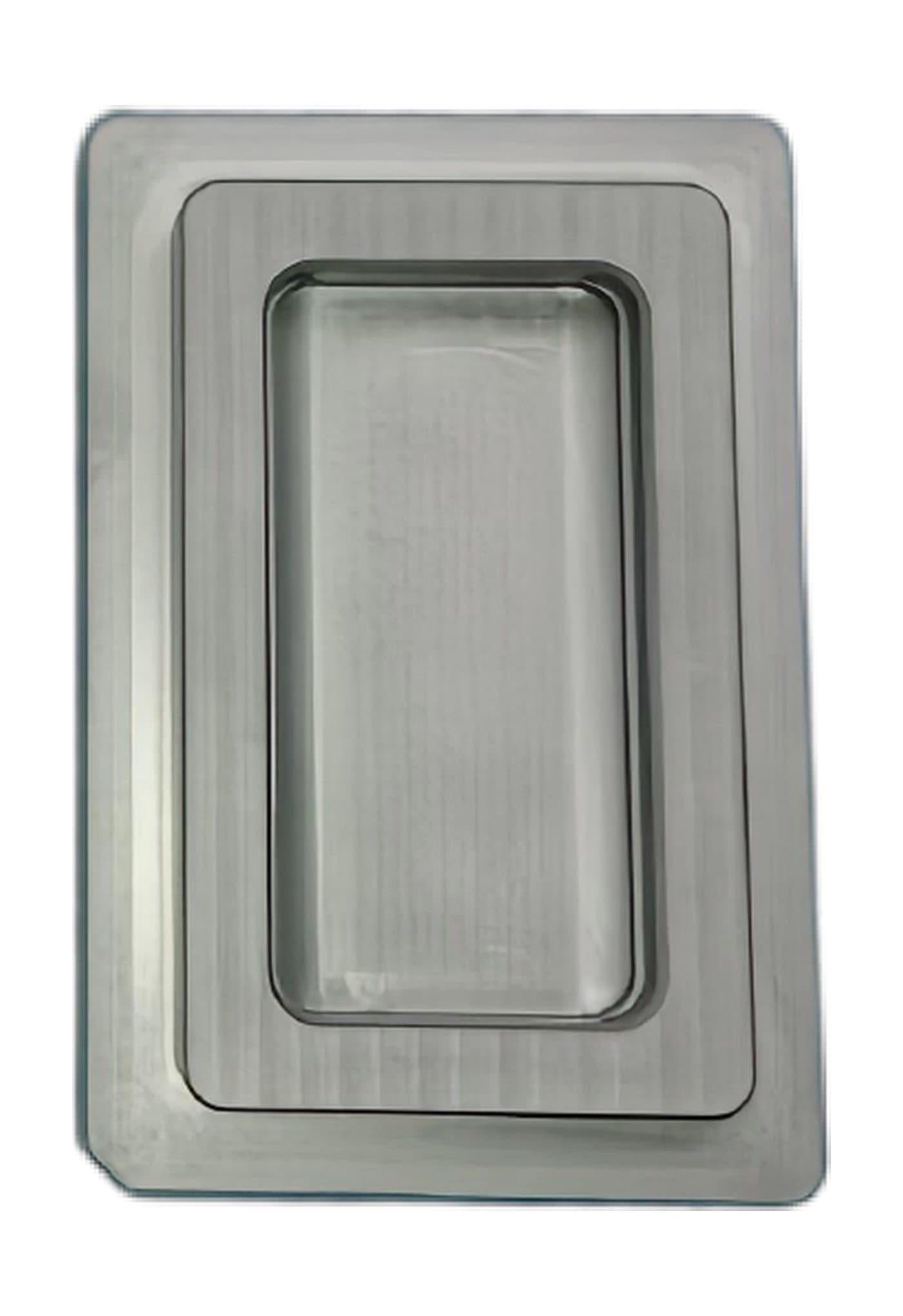
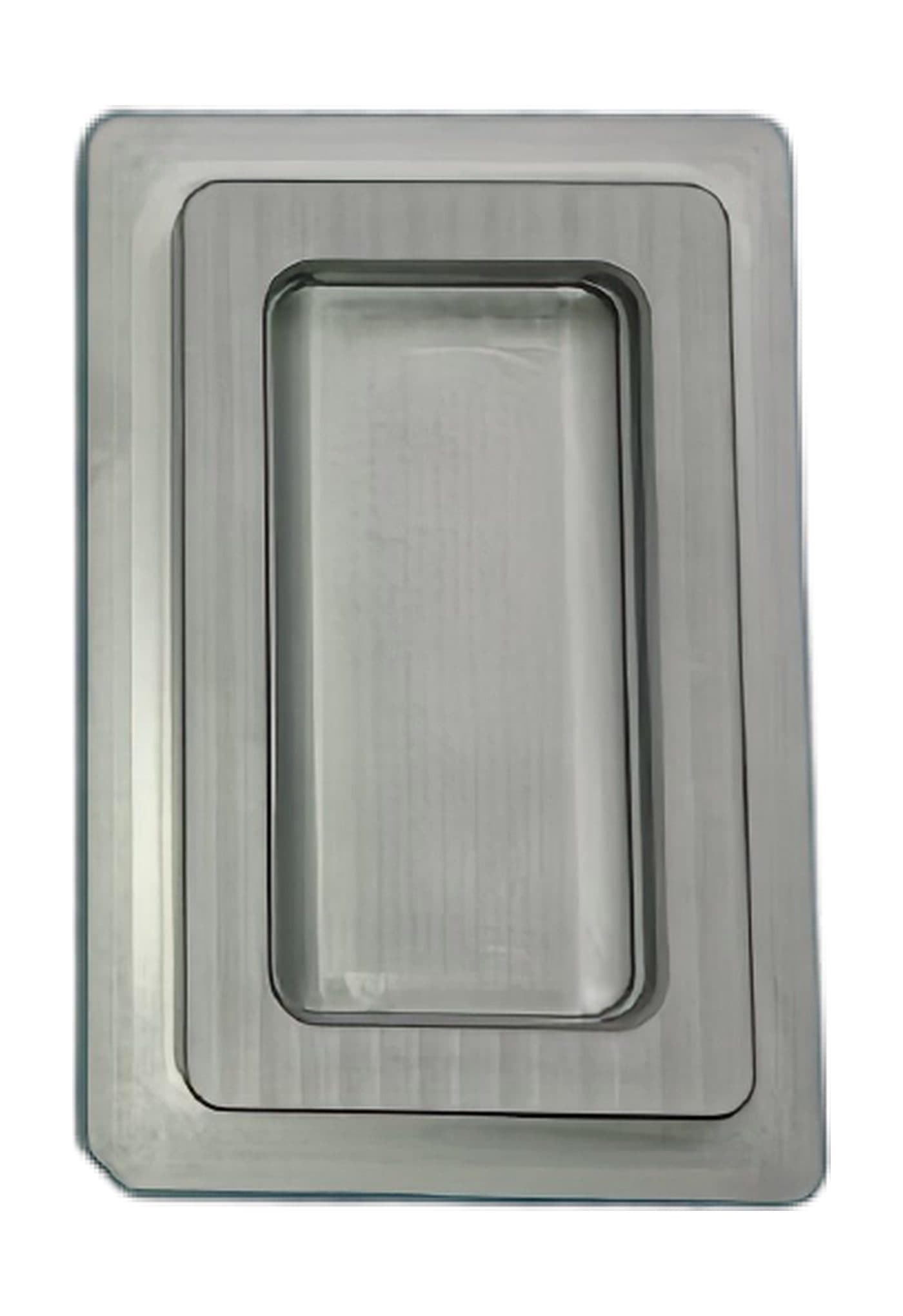
CC-3DCarbon-Based Composite 3D Glass Hot-Forming Mold
750°C+ steady · replaces graphite · 50x+ tool life · enables glass-ceramic forming
01Why CC-3D
Carbon-based composite mold for 3D glass hot forming that withstands 750°C+ (enabling glass-ceramic forming) and delivers over 50x the service life of graphite molds, supporting 3D double-curved and large-curvature shapes.
Key Features
No oxidation or carbonization up to 750°C+ (critical for glass-ceramic forming, where graphite degrades severely)
stable at high temperature with minimal thermal deformation and long-term accuracy
supports 3D double-curved and large-curvature forming
coated high-gloss surface resists sticking and scratching for higher yield
service life over 50x that of graphite
modular and lightweight for fast changeover in automated mass production
excellent thermal-shock and thermal-cycle resistance for long-run production
Applications & Materials
Hot forming of 3D curved glass (phone covers/back panels, tablets, wearables, automotive displays); 750°C+ glass-ceramic hot forming where graphite molds carbonize
Carbon-based composite (carbon-fiber-reinforced ceramic matrix)
Traditional graphite hot-forming molds (drop-in upgrade)
Process
Heated in a hot-forming press to shape 3D curved glass; standard cover glass forms at approx. 680–700°C, while glass-ceramic requires 750°C+ — graphite molds oxidize and carbonize severely above 750°C with rapidly declining life, whereas carbon-based composite molds do not carbonize at these temperatures and keep life and accuracy stable
CC-3D is a specialty new-material hot-forming mold from Shengpu Chemical that replaces traditional graphite tooling for 3D curved glass forming of phone, tablet, wearable and automotive covers/back panels, and is especially suited to 750°C+ glass-ceramic processes. Standard cover glass forms at roughly 680–700°C where graphite survives, but glass-ceramic requires over 750°C, a range in which graphite oxidizes and carbonizes rapidly and tool life collapses — the very bottleneck this product targets. Built from carbon-fiber-reinforced ceramic matrix that neither carbonizes nor deforms at 750°C+, it benchmarks graphite molds as a longer-life, higher-precision, drop-in upgrade with 50x+ tool life.
Need a sample or datasheet?
Contact us for full specs, MSDS and sample support for CC-3D
Related — other carbon-based composite products
Related Guides
What replaces graphite molds for glass hot bending when mold life is too short?
Graphite molds degrade by oxidation/carbonisation at high temperature. The alternative is carbon-based composite molds such as CC-3D: 750 °C+ service temperature and 50×+ the service life of graphite.
Read guide →Which mold for 750 °C microcrystalline glass bending, and why does graphite carbonise?
Microcrystalline glass bending needs 750 °C+. Graphite oxidises and carbonises badly there; CC-3D carbon-based composite molds do not, and last 50×+ longer.
Read guide →CC-3D carbon-based composite mold: specifications and service-life advantage
CC-3D key figures: carbon-based composite (carbonfibre-reinforced ceramic matrix); 750 °C+ service temperature; 3D hyperboloid/large-curvature forming; ~680–700 °C for normal cover glass; 50×+ graphite mold life.
Read guide →Need technical support or a sample?
Tell us your substrate, contamination and process conditions — our process engineers will recommend a grade and arrange sample validation.
- Phone
- +86 769-82786068
- sales@sempurion.com
- Website
- www.sempurion.com
- Address
- Songshan Lake, Dongguan, Guangdong, China